Causal Inference2018 · Research
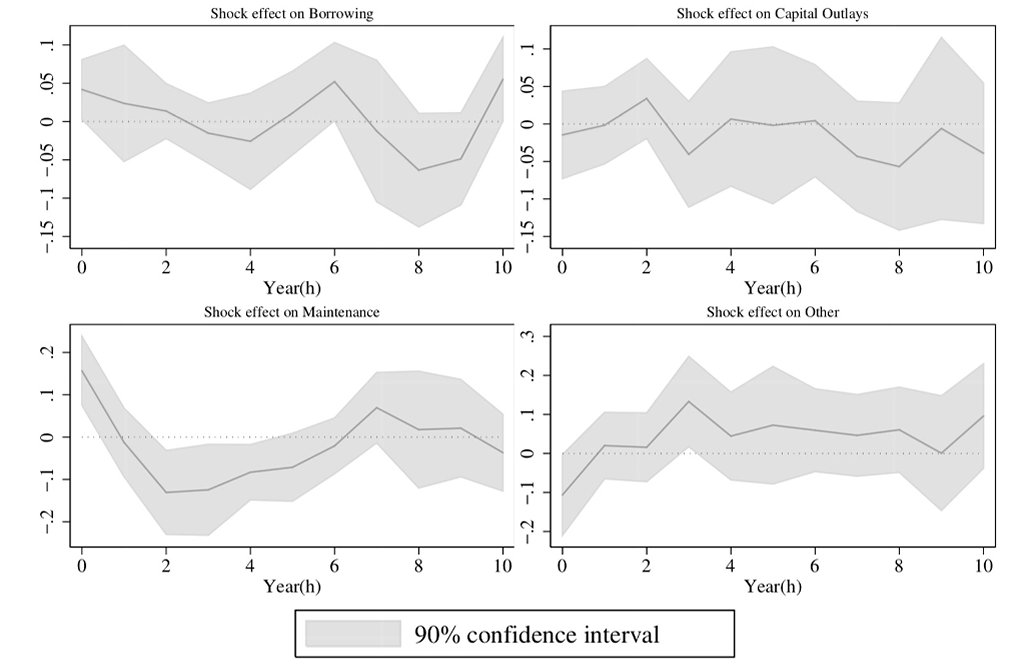
Deferring maintenance expenditures in fiscal downturns can be more costly than accumulating debt or cutting pension contributions. This paper takes advantage of the formulary distribution of Federal highway grants to examine the extent and context of highway maintenance deferral. Since the formula factors used in the apportionment of Federal highway grants are always three years old, I can measure exogenous grant shocks as the difference between this year’s and previous year’s forecast of each state’s future grants. I show that state governments respond to a negative grant shock by cutting highway maintenance expenditures more rapidly than other expenditures. The Impulse Response Functions (IRFs) of maintenance expenditures as a share of total expenditures show that states only partially compensate for the initial cuts in the subsequent periods – deferring maintenance expenditures and accumulating maintenance needs. Furthermore, I find that the deferral of maintenance expenditures is more pronounced in election years, which suggests that this inefficient behavior is subject to agency problems.